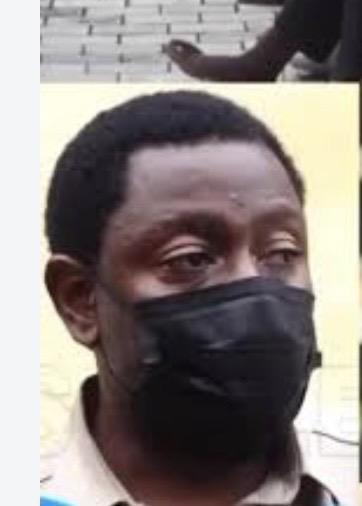
•••Says My Job Is to Save Lives
Fidelia Soriwei, Abuja
A consultant nephrologist, Dr. Benjamin Oyime, has denied any complicity in organ harvesting, insisting that his role as a medical practitioner is to treat patients with kidney disease and ensure that transplant procedures comply with medical and legal requirements.
Speaking during an interview after being paraded by the police over allegations linked to an alleged kidney harvesting network, Oyime maintained that the kidney transplant procedures handled by his team followed the established protocols.
Addressing the allegations, the doctor said his interaction is primarily with patients suffering from kidney failure and those requiring kidney transplants.
According to him, patients are first advised to seek willing relatives for kidney donation before exploring other options.
“I’m Dr. Benjamin Oyeme. I’m a consultant nephrologist. What that means is that I take care of people who have kidney diseases. That’s what I do,” he said.
“As a medical practitioner, we don’t really engage in all that. My own interface is usually with the patient,” he said.
“For kidney transplantation, we usually tell them, first and foremost, that we would prefer they get a relative. If you can convince any of your relatives to come in for this transplant, that would be ideal,” he stated.
He explained that prospective donors are subjected to extensive medical screening before any procedure can be considered.
“Our responsibility is to ensure, first and foremost, that the person is of legal age — at least 18 years old. We also ensure that the person is clinically fit. We conduct all the necessary investigations to confirm that the donor is medically suitable,” Oyime added.
The nephrologist added that after medical clearance, prospective donors are referred to a legal team for documentation and verification.
“The legal team then verifies all the documents presented by the individual. They also ensure that the person swears an affidavit before a High Court to confirm that the donation is voluntary and that there is no coercion or monetary inducement before the person is referred back to the hospital,” he said.
He maintained that the transplant procedure at the centre of the investigation complied with the law.
“In this case, the procedure was carried out. Everything was done in accordance with the law. The surgery was successful, the patient recovered well, and the donor was also fine after the operation,” he stated.
Responding to concerns about the legality of the procedure, Oyime insisted that the transplant process complied with established legal requirements.
“The person must be of age. So, once the person is of age and you come with a relative that also consents, then we can go ahead. We don’t do anything illegal,” he said.
The doctor also defended the consent process, describing it as detailed and comprehensive.
“The consent form is very extensive. We take time to go through it with anyone coming for the procedure. It is not a single-page document; it runs into several pages. We explain every section carefully before the procedure is carried out,” he said.
On reports that a donor was allegedly assigned a different identity, Oyime said the medical team was unaware of any false information at the time of the procedure.
“During the course of the investigations, we discovered that the names provided were fictitious. We had no knowledge at the time that the names given to us were not genuine,” he said.
The consultant further stated that verifying the authenticity of family relationships presented by donors was not part of his responsibilities as a doctor.
“That is not my duty as a doctor to investigate,” he said.
Emphasising his professional credentials, Oyeme stated: “I’m a certified medical doctor and a certified consultant nephrologist. I graduated from the University of Benin in 2004.”
He also rejected suggestions that donors were paid through the medical team.
“No, no, no. As I have already explained, there is no monetary gain involved in this procedure,” he said, adding that any post-procedure support provided to donors was arranged by recipients and not by the medical team.
Oyime spoke in defense of his role in the ongoing investigation into alleged organ harvesting and human trafficking in Nasarawa State.
Operatives of the STS-FID 23-year-old Emmanuel Ode, a resident of Auta Balefi; 48-year-old Dr. Benjamin Oyime, a nephrologist and consultant to Wellington Hospital; and Dr. Daniel Otokpa, also a nephrologist and Head of Clinical Services at Wellington Hospital on August 19, 2026.
The arrests followed a complaint allegedly filed by 47-year-old Mrs.
Julian Abot about harvesting of her son’s organ.
According to police investigation, Ode allegedly confessed to facilitating the removal of a kidney from a 22-year-old man identified as Samuel Ezekiel.
Investigators alleged that on April 24, 2026, Ode took Ezekiel to Wellington Hospital in the Life Camp area of Abuja for a kidney removal procedure after allegedly agreeing to pay him N1.7 million.