

Fidelia Soriwei, Abuja
The Nigeria Customs Service (NCS) has initiated stronger operational cooperation with six security and regulatory agencies to tackle cross-border money laundering, terrorism financing, drug trafficking and other financial crimes in Nigeria.
The initiative involves the Economic and Financial Crimes Commission (EFCC), National Drug Law Enforcement Agency (NDLEA), Nigeria Police Force, Nigerian Financial Intelligence Unit (NFIU), Nigeria Immigration Service and National Counter-Terrorism Centre under the Office of the National Security Adviser.
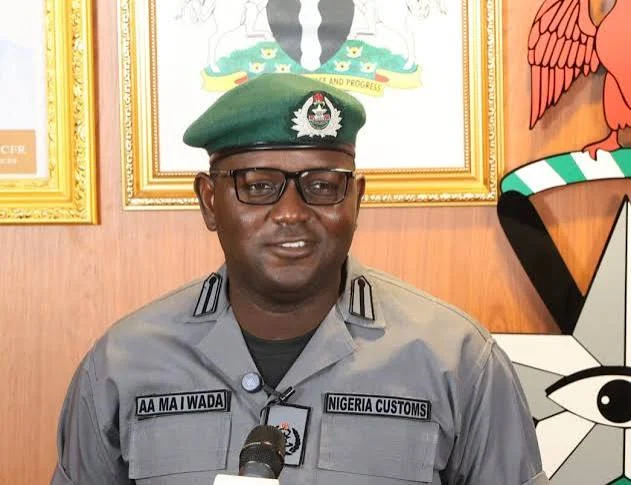
According to a statement issued on Sunday by the Customs National Public Relations Officer, Deputy Comptroller Abdullahi Maiwada, the collaboration followed a three-day engagement involving the agencies from October 27 to 29, 2026. The exercise focused on addressing information-sharing gaps, improving intelligence coordination and strengthening the detection of suspicious cross-border financial transactions.
The engagement was led by the Assistant Comptroller-General in charge of Headquarters, Muhammad Shuaibu, who said the initiative was designed to move beyond routine consultations by assessing practical border control operations and improving joint responses to financial crimes.
“The sole objective of this mission is to effectively detect and disrupt cross-border illicit financial flows. The measures include field visits to selected border stations to assess practical Customs control measures and engage with relevant agencies,” he said.
Shuaibu explained that the exercise included visits to selected border stations to examine existing Customs controls and identify areas where cooperation among security and regulatory institutions could be improved.
The Chief Executive Officer of the NFIU, represented by the Chief Operating Officer, Intelligence Security Service Sector, Muhammed-Mustapha, commended Customs for its contributions to border security and the fight against smuggling. He described the relationship between both institutions as longstanding, noting that the Customs Service was among the first agencies to collaborate with the financial intelligence unit following its establishment.
“When NFIU was created, NCS was the first to collaborate with us. No particular agency understands things better than how Customs does globally,” Mustapha said.
A mentoring team from the World Customs Organisation (WCO), led by Shahiduzzaman Sarkar, also participated in the engagement, sharing international approaches to combating money laundering and terrorism financing while encouraging stronger institutional cooperation.
However, participants identified communication gaps, bureaucratic delays and concerns surrounding database privacy as challenges affecting effective intelligence sharing among government agencies. Discussions subsequently focused on addressing these obstacles to facilitate faster information exchange and coordinated action against criminal networks.
The engagement also featured the presentation of Nigeria Customs Service awards and World Customs Organisation certificates to participating agencies in recognition of their contributions to the initiative.
In a related development, the Customs Service has showcased its digital transformation programme at the World Customs Organisation Smart Customs Project Global Event 2026 in Brussels, Belgium, held from October 29 to 30.
Represented by Assistant Comptroller Omolara Adedeji, the Service presented its Unified Customs Management System, known as B’Odogwu, alongside its deployment of artificial intelligence, data analytics and electronic cargo tracking technologies.
In a presentation titled, “Nigeria Customs Service: The Journey Towards Smart Customs,” Adedeji said the modernisation programme was intended to improve operational efficiency, strengthen risk management and promote transparency in trade processes.
“The NCS is undergoing a deliberate transition from traditional Customs operations towards integrated digital operations. Through the Service’s Modernisation Project, we are strengthening automation, electronic processing and data-driven decision-making to build a more efficient, responsive and technology-driven Customs administration,” she said.
Adedeji identified smart technology and smart data as the two pillars of Nigeria’s Smart Customs vision, explaining that they encompass automated procedures, integrated digital platforms, intelligence-led interventions, data analytics and improved information sharing. She added that B’Odogwu was designed to support electronic Customs processing and strengthen engagement with government agencies and private-sector operators.

