

Fidelia Soriwei, Abuja
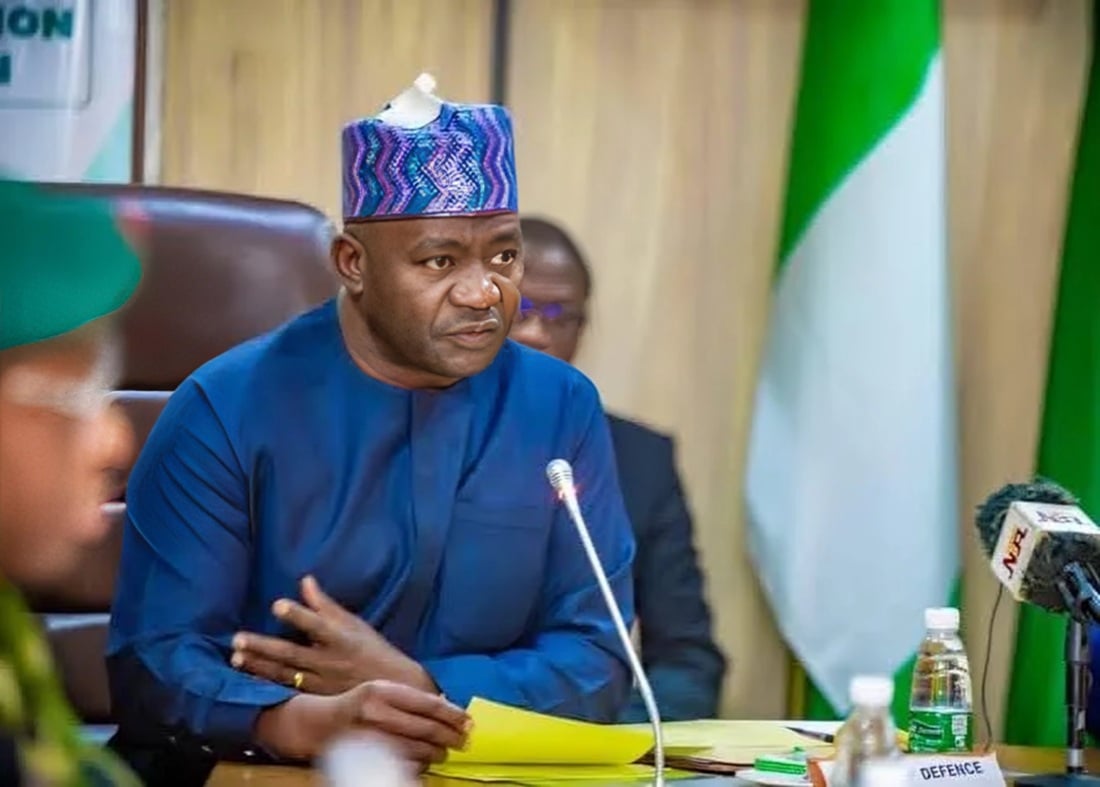
The Minister of Defence, Gen. Christopher Musa (retd.), has cautioned security agencies against depending on last-minute deployments to secure elections, stressing that effective election security requires months of preparation, intelligence gathering and coordinated action.
Speaking on Tuesday at a security seminar organised by Blueprint newspaper, Musa said election security should be approached as a continuous process rather than a task limited to election day.
According to him, successful election security depends on early planning, intelligence-led operations, collaboration among relevant agencies, effective communication and constant monitoring of emerging threats.
“The lesson is clear: successful election security is not achieved through last-minute deployments. It is achieved through months of planning, intelligence-led operations, inter-agency coordination, effective communication and continuous assessment of emerging threats and, above all, through the confidence that citizens place in the institutions established to serve them,” he said.
He added, “Security should never be viewed as an event. It is a process that begins long before campaigns commence and continues long after the final vote has been counted.”
Musa noted that evolving security challenges now extend beyond the physical protection of polling units, with threats increasingly emerging through cyberspace, misinformation campaigns, economic pressures and the exploitation of ethnic and religious divisions.
He warned that election integrity could be undermined by individuals manipulating information online and eroding public confidence in democratic institutions.
To strengthen election security, the minister proposed a six-pillar framework centred on strategic intelligence, cybersecurity, civil-military coordination, unified communication, a responsible information environment and active citizen participation.
“The first pillar: Strategic Intelligence should form the foundation of election security planning,” Musa said, adding that modern election security must be driven by intelligence, early warning systems and real-time information sharing among relevant institutions.
He also emphasised the importance of protecting electoral technology and digital infrastructure from cyber threats, while calling for stronger collaboration among security agencies based on respect for their constitutional responsibilities.
On combating misinformation, Musa said timely and coordinated communication was essential to maintaining public trust before, during and after elections, stressing that government alone could not win the fight against false information without the support of the media, technology companies, civil society groups and citizens.
Also speaking at the seminar, former Zamfara State Governor AbdulAziz Yari urged political actors not to exploit insecurity for political gain, describing security as a collective national responsibility.
“Let us encourage all political parties to understand that insecurity is not something to be traded with for the purpose of winning the hearts of citizens. The citizens are aware that we are in trouble. From Obasanjo, Yar’adua and Jonathan to Buhari and today. We need to be fair and just,” Yari said.
The former governor, who served between 2011 and 2019, said insecurity had remained a major national challenge across successive administrations and called for a united approach to addressing the problem.

