

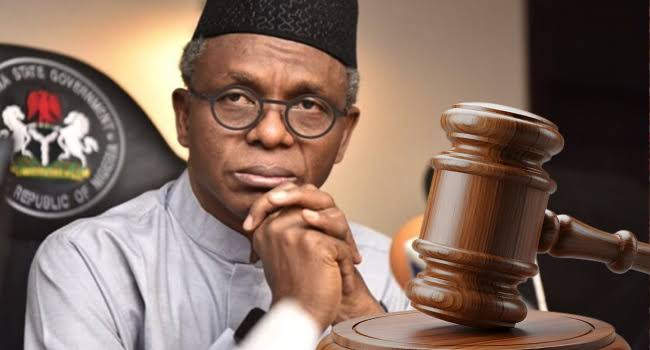
By Attah Ede
Former Kaduna State Governor Nasir El-Rufai on Wednesday denied tapping the telephone conversations of Mallam Nuhu Ribadu, the National Security Adviser (NSA).
El-Rufai, who stated this while opening his defence before Justice Joyce Abdulmalik of the Federal High Court in Abuja, also denied asking anyone to do so.
The former governor told the court that he had never owned equipment used to intercept telephone calls and had no technical knowledge of how to do so.
Led in evidence by his lawyer, Paul Erokoro, SAN, El-Rufai also denied having access to the NSA’s communication networks or devices.
He maintained that his comments during a February interview on Arise Television were political rhetoric and not an admission that he had intercepted Ribadu’s telephone.
El-Rufai said: “What I wanted to say was that the government was monitoring opposition figures and that we knew what they were doing.
“I used the word ‘tap’ as political rhetoric to make them uncomfortable. It was rhetorical, not literal. It was linguistic flourish, just to make the government uncomfortable.”
When reminded by Erokoro that his interviewer had told him it was illegal to tap someone’s phone, he said his intention was to make it public that the government was secretly listening to opposition figures’ conversations without lawful court orders.
He said: “I was referring to the government violating the law and not someone else doing it.”
On who he referred to as “we” in his claim that “we are listening to their conversations…”, the former governor said he meant himself and other leading opposition figures.
He said he and others did not tap Ribadu’s phone but learnt about his plan to abduct him and have him detained through a mutual friend. He refused to disclose the identity of the friend, saying he did not want to jeopardise the interests of his source.
The former governor said that when he got home after the interview, the friend came to him and said he had not actually tapped the NSA’s phone. El-Rufai said he responded by telling the person that he knew, but had only chosen to make the claim to make those in government uncomfortable.
Earlier, he told the court that he had known Ribadu since 2003, when he, as head of the Bureau of Public Enterprises (BPE), assisted him in establishing the EFCC by providing office space and funds.
El-Rufai said the breakdown in their relationship occurred when Ribadu ran for the presidency in 2011 and he believed former President Muhammadu Buhari was a better candidate.
He claimed that the NSA was against him because he opposed President Bola Tinubu’s re-election.
The former governor denied being involved in phone-tapping, adding that he neither had the knowledge nor the equipment to intercept telephone calls.

