

Fidelia Soriwei, Abuja
Nigeria’s High Commissioner to South Africa, Femi Fani-Kayode, has disclosed that he personally requested to be posted to South Africa after initially receiving an ambassadorial assignment to a European country.
Fani-Kayode said he appealed directly to President Bola Tinubu for the change of posting, adding that the President approved his request.
“I was initially posted to a European country, and I made an appeal to our president that I’d prefer to go to South Africa, which he graciously, you know, agreed to. That’s why I find myself here,” he said.
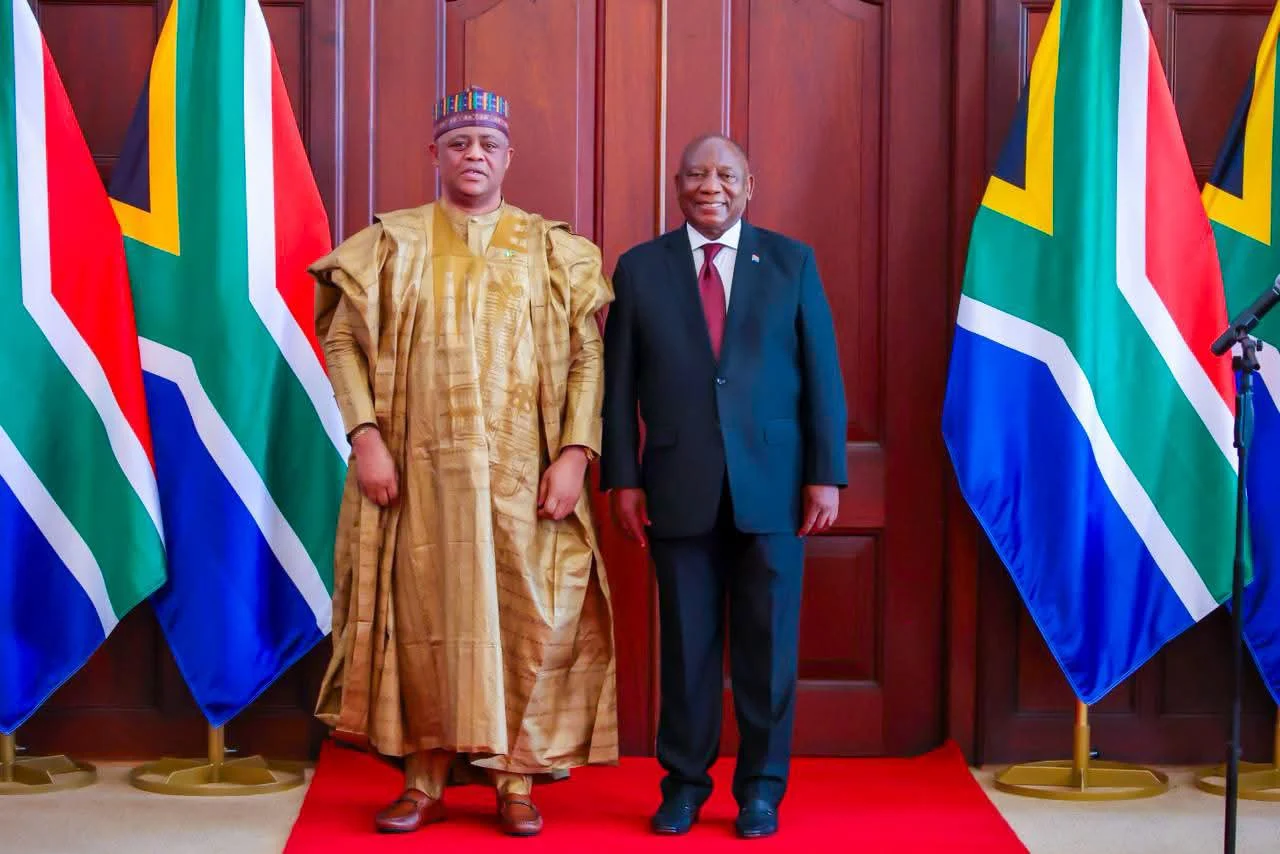
The envoy made the disclosure at a dinner and reception organised in his honour by officials of the Nigerian High Commission, the Nigerian Consular Office and members of the diplomatic community in Pretoria. The event followed his presentation of letters of credence to South African President Cyril Ramaphosa on November 13. He shared a video of his remarks on X on Wednesday.
Explaining his priorities, Fani-Kayode said he began examining issues affecting Nigerians in South Africa immediately after receiving approval for the diplomatic assignment.
“From the time I was accepted and I was given the agrément to come to South Africa, that’s when I started looking into some of the things that were going on here which touched and concerned members of our community,” he said.
He emphasised that protecting Nigerians living in South Africa would be his foremost responsibility, particularly amid growing concerns over their treatment and safety.
“I am here first and foremost to protect the interests of members of the Nigerian community in South Africa,” he stated.
Fani-Kayode acknowledged growing dissatisfaction among Nigerian political and business leaders over developments affecting Nigerians in the country, noting that some lawmakers had advocated stronger diplomatic measures against Pretoria.
“The feeling that is being enunciated by a number of our leaders, particularly those in the Nigerian Senate and the Nigerian House of Assembly, and a number of other leaders from the private sector, about South Africa, are not that good,” he said.
“Some have called for a complete break in diplomatic ties, which the Federal Government and the President has resisted. Some have called for sanctions,” he added.
He, however, called for stronger cooperation between Nigeria and South Africa, describing both countries as important players in Africa’s development. He cautioned against allowing diplomatic disagreements to weaken relations between the two nations.
“It is important we recognise the fact that together, South Africa and Nigeria can actually help to move Sub-Saharan and Africa in general forward,” he said.
“We must not allow any division. We must not allow any misunderstanding. We must not allow even any slight to pull us apart.”
Describing the two countries as nations with shared strengths and considerable potential, Fani-Kayode praised South Africans as “equally resilient, hardworking, decent, civilised, with an equally rich history and heritage as we have”.
His diplomatic assignment comes amid renewed tensions between Nigeria and South Africa following fresh anti-immigrant violence in 2026, including attacks linked to xenophobic and Afrophobic sentiments. The Federal Government has condemned the violence and called on South African authorities to protect Nigerians and other African nationals.
Fani-Kayode’s arrival has also attracted attention following a disagreement over the livestream of his November 13 accreditation ceremony. The envoy accused the South African Presidency of excluding his introduction, members of the Nigerian delegation and his speech from the broadcast, alleging that the livestream was interrupted during his presentation and resumed after he had finished.
He said he raised the complaint with Ramaphosa, who questioned the officials responsible and directed them to address the matter. However, South African presidential spokesperson Vincent Magwenya disputed aspects of his account, saying the President had referred him to Sophie Mokoena, the South African Broadcasting Corporation’s acting political and foreign editor. Magwenya also described Fani-Kayode’s handling of the complaint as “grossly inappropriate”. The South African Presidency subsequently released a separate video of the envoy’s speech.
The disagreement was further discussed during a November 17 meeting between Fani-Kayode and South Africa’s Director-General of International Relations and Cooperation, Zane Dangor. South African officials raised concerns about his public comments and reminded him of Article 41 of the Vienna Convention on Diplomatic Relations, which requires diplomats to respect the laws and regulations of their host countries and conduct official business through established diplomatic channels. Fani-Kayode later described the meeting as cordial and constructive.

