

Fidelia Soriwei, Abuja
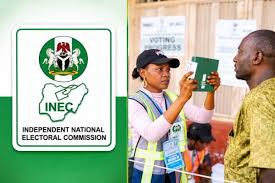
The Independent National Electoral Commission (INEC) has expressed satisfaction with the performance of its Bimodal Voter Accreditation System (BVAS) during Saturday’s mock accreditation and election simulation exercise in Lagos State, with voter accreditation completed in less than one minute per person.
The Resident Electoral Commissioner (REC) in Lagos, Prof. Ayobami Salami, said the exercise had proceeded smoothly, with no complaints of technical glitches or network failure from electoral officials or voters.
Salami made the assessment while monitoring the exercise at Polling Unit 057, Ward 07, Shitta/Ogunlana Drive, Surulere, according to the News Agency of Nigeria.
“I have been very impressed with what we have seen. You have accompanied us on this exercise, and you have observed that there has been no problem with the BVAS.
“It takes less than one minute to accredit a voter, and everything has gone seamlessly. So far, there has been no complaint from our personnel, members of the public or voters,” Salami said.
The mock election exercise was conducted in 490 polling units across Lagos State’s 245 wards, with two polling units selected in each ward to assess INEC’s electoral technology and procedures ahead of the 2027 general elections.
To reduce queues and speed up voter accreditation, INEC has lowered the maximum number of registered voters assigned to a BVAS machine from 1,250 to 850.
Salami explained that polling units with more than 850 registered voters would be provided with additional machines to prevent delays during accreditation.
“Previously, the threshold was 1,250 voters per BVAS. We have now reduced it to 850 because the previous arrangement caused long waiting times for voters.
“To make accreditation easier and encourage more people to come out and vote, we have reduced the threshold from 1,250 to 850.
“Therefore, whenever a polling unit has more than 850 registered voters, we provide an additional BVAS machine to reduce waiting time,” he said.
The REC also emphasised that voter accreditation would depend on successful identity verification through either facial recognition or fingerprint scanning.
“If we cannot validate a voter through either of these two methods, it will be difficult for us to allow that person to vote. Otherwise, we would be going against our own law,” he said.
Salami disclosed that INEC had acquired approximately 57,000 additional BVAS machines, which had been calibrated alongside existing devices to ensure uniform settings across the equipment.
He said the machines were being tested for voter accreditation and the electronic transmission of polling unit results to the INEC Result Viewing Portal (IReV).

