

By Kamsi Anayo Awka
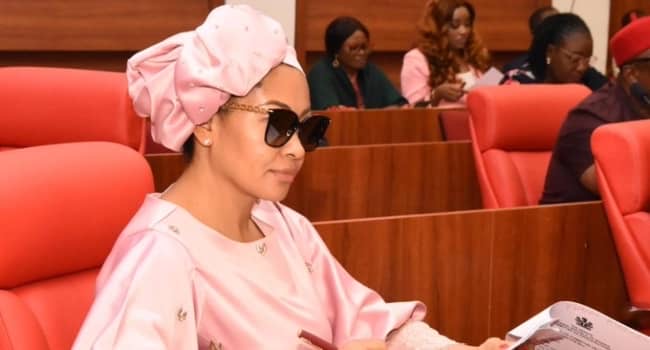
The planned commencement of trial in the cybercrime charges against suspended Kogi Central Senator, Natasha Akpoti-Uduaghan at the Federal High Court in Abuja was stalled on Monday following an objection raised by her counsel, Ehiogie West-Idahosa, a Senior Advocate of Nigeria (SAN).
Akpoti-Uduaghan is facing a six-count charge under the Cybercrimes (Prohibition, Prevention, etc.) (Amendment) Act, 2024, in a suit brought against her by the Federal Government.
Arraigned last June 30 and granted bail on self-recognition, she is alleged to have transmitted false and injurious information via electronic means with the intention of maligning, inciting, endangering lives and breaching public order.
The charge, filed by the Director of Public Prosecution of the Federation, Mohammed Abubakar, stated that Akpoti-Uduaghan, while addressing a gathering on April 4, 2025, in Ihima, Kogi State, alleged that the Senate President Godswill Akpabio instructed a former Governor of Kogi State, Alhaji Yahaya Bello, to have her killed in the state.
She was alleged to have repeated the same claim during a television interview, asserting that both political leaders plotted to kill her in the state.
At the resumed sitting, the prosecuting counsel, David Kaswe informed the court that the business of the day was for the prosecution to open its case by calling its first witness.
Kaswe, who had arranged for a television screen to be mounted in the courtroom in preparation for the proceedings, told the court that the prosecution had its witness present and was ready to proceed.
In response, defence counsel, Ehiogie West-Idahosa raised concerns about the possibility of the prosecution opening its case.
He told the court that his client had filed a notice of preliminary objection challenging the jurisdiction of the court to hear the matter.
West-Idahosa explained that the objection was not directed at the nature of the charge itself, but at what he described as an alleged abuse of the prosecutorial powers of the Attorney-General of the Federation.
The defence lawyer also complained that they had not been served with copies of the statements of the prosecution’s witnesses.
Although Kaswe argued strongly that the objection raised by the defendant ought not to stall the business of the day, Justice Umar insisted that the prosecution must first respond to the objection.
The trial judge, Justice Mohammed Umar stated that he intended to first determine the preliminary objection raised by the defence before taking any further steps in the matter.
He consequently adjourned the case to Oct. 20 for the hearing of the objection and commencement of the trial

