

Fidelia Soriwei, Abuja
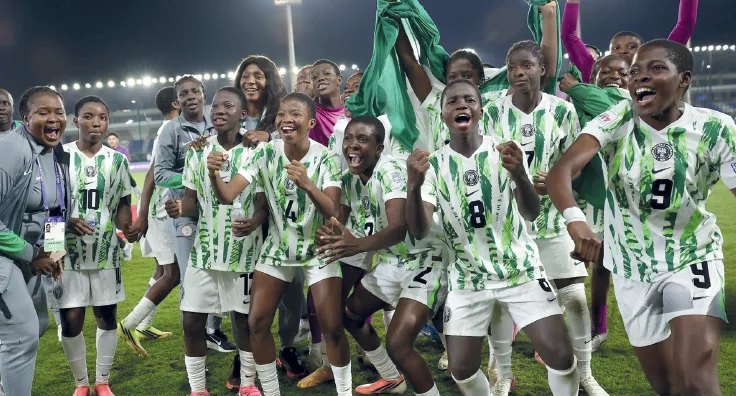
The National Sports Commission (NSC) has demanded an apology from former Anambra State Governor Peter Obi over his public criticism of officials who declined a request for him to meet Nigeria’s victorious U-17 women’s team, the Flamingos, at the Nnamdi Azikiwe International Airport, Abuja.
The commission, however, denied Obi’s allegation that he was personally stopped from greeting the players or that officials threatened to lose their jobs if they allowed him access to the team.
In a statement issued on Monday titled, ‘NSC Responds to Peter Obi: Flamingos’ World Cup Victory Must Not Be Politicised’, NSC Chairman, Shehu Dikko, said officials of the commission and the Nigeria Football Federation (NFF) who received the team did not see Obi around the players or the international terminal.
According to Dikko, two individuals wearing Obi’s campaign face caps and other campaign attire approached the officials and requested that the former governor meet and take photographs with the players. He said the proposed arrangement could also have involved campaign materials.
The commission explained that the request was declined because it was made without prior notice and the players had just returned from Morocco at about 5:30 am aboard an Air Maroc flight. Dikko said the team was exhausted after its journey and a demanding World Cup campaign, making the timing unsuitable for an unscheduled engagement.
“The officials exercised their judgment in declining the sudden meeting and photograph request at that time, taking account of the players’ welfare and the circumstances of the request and without any prior notice of any arrangement for airport reception for the team,” he said.
Dikko also challenged Obi’s account of the incident, noting that the former governor had said he was at the airport around 7 am to board a flight to Enugu. He argued that such a flight would ordinarily depart from the domestic terminal, whereas the Flamingos arrived through the international terminal.
He added that airport officials and passengers welcomed the players without discrimination, with Nigerians taking photographs, dancing and shaking hands with the young footballers as they proceeded to their buses. According to him, media coverage of the reception did not capture Obi anywhere near the team.
Obi had earlier accused NFF officials of preventing him from congratulating the Flamingos after their historic return to Nigeria on Monday. In a statement titled, ‘A New Dimension of Toxic Politics in Nigeria’, he said he sighted the players at the airport and instructed his Protocol Officer, Jackie Wayas, to find out whether he could greet them.
He claimed he was subsequently informed that the officials had refused his request and warned that they could lose their jobs if he approached the team. The former governor described the incident as another example of what he called toxic politics in Nigeria.
Rejecting the allegation, Dikko said there was no evidence that any official’s employment was threatened over the matter. He also criticised Obi for presenting the incident as political intimidation without first seeking clarification from the NSC or NFF.
“Turning a request for an unscheduled interaction into a toxic narrative of political victimisation shifts attention from the players’ achievement to an individual political grievance.
“These young champions should not be drawn into that controversy and never deserved this from Mr Obi,” he said.
The NSC chairman further stressed that the Flamingos were minors and had a designated safeguarding officer within their technical crew. He said their welfare, dignity and protection from undue pressure must guide every interaction, including visits and photograph sessions.
“Our young athletes must not be used to suggest allegiance to any political party. These considerations apply equally to public officials, political figures and other members of the public,” Dikko stated.
He urged Obi to offer an unreserved apology to the players, arguing that the controversy had overshadowed their historic achievement. He also acknowledged the former governor’s congratulatory messages during the closing stages of the competition but called for more consistent support for national teams beyond their moments of success.
The commission invited Obi and other Nigerians interested in meeting or hosting the players to submit formal requests to the NSC or NFF to enable appropriate arrangements that would accommodate the team’s schedule and welfare.
Dikko also cited the example of a Nigerian businessman who sponsored a delegation to Morocco to support the Flamingos during the final and subsequently donated $50,000 to the players on the pitch without seeking media attention or political recognition.
Addressing Obi’s separate allegation that he was prevented from visiting Super Eagles players in their dressing room after Nigeria’s 2026 FIFA World Cup qualifying match against Zimbabwe in Uyo on March 25, 2025, Dikko said the players had declined to receive visitors.
He explained that he attended the match alongside Obi and the governors of Lagos, Bayelsa and Akwa Ibom states, but the players requested an immediate meeting among themselves following the unfavourable result. Consequently, no dignitary or official, including Dikko and the governors, entered the dressing room.
He also pointed to FIFA regulations governing access to technical areas and dressing rooms, explaining that only accredited individuals could enter without additional clearance. Other visitors were required to obtain prior approval through the football federation, as violations could attract fines against the NFF or jeopardise the stadium’s eligibility to host future matches.
The NSC chairman maintained that football should remain a unifying national asset rather than become a platform for political disagreements. The Flamingos made history on Saturday by defeating Japan 2-1 in the FIFA U-17 Women’s World Cup final in Morocco, becoming the first African nation to win the competition.

