

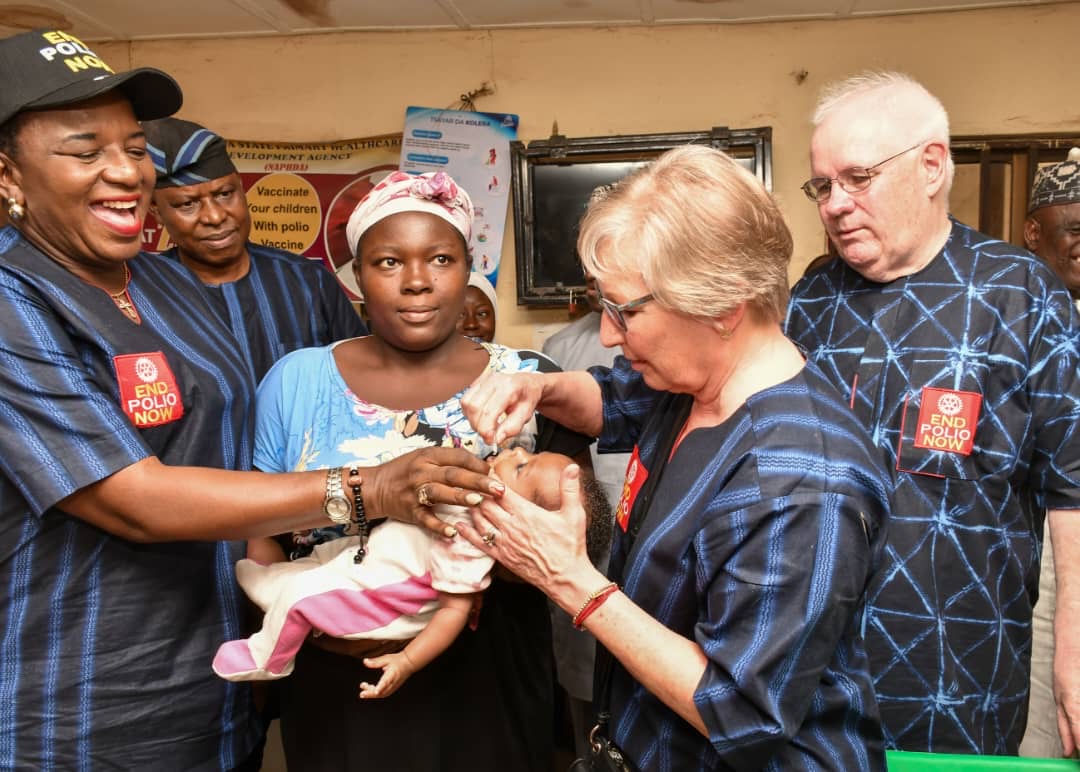
L-R: Trustee Rotary Foundation, Pearl Ijeoma Okoro, Director, Rotary International Polio Pus, Carol Pandak and Chairman, International Polio Plus Committee (IPPC), Mr. Michael McGovern, during the Symbolic Immunization, held at Primary Health Care Area 1 Masaka Karu LGA of Nasarawa State, yesterday.
Rotary International has spent $3 billion in the fight against poliovirus globally, Michael McGovern, Chair of the Rotary International Polio Plus Committee, has revealed.
The Rotary International Chief, who reaffirmed the organization’s commitment to eradicating polio in Nigeria, urged the Nigerian government and other stakeholders to remain steadfast in prioritizing polio eradication efforts.
Speaking on Tuesday at the Masaka Primary Health Center in Nasarawa State, where he participated in a symbolic polio immunization exercise, McGovern emphasized the importance of continued efforts to protect children from the devastating effects of polio.
“Over the years, we have invested nearly $3 billion. It’s a lot of money, but we are happy to do it because we see the benefit, 20 million children who have not been disabled.
“The biggest impression that everyone has to have here is to see the beautiful children and recognize the importance of their health.
“Ensuring they receive necessary immunizations is vital for them to live healthy lives,” he said.
Despite significant progress, he noted that Nigeria remains at risk, with cases of vaccine-derived poliovirus still being recorded, saying, “While the cases aren’t huge in number, they are crucially important in terms of eradicating this sad, sad disease once and for all”.
He stressed the importance of routine immunization to prevent a resurgence, saying, “The most responsible thing is for everyone to support all routine immunizations, for measles, polio, and many other diseases.
“Immunization strengthens the immune system and protects children from multiple illnesses, not just polio”.
McGovern, however, acknowledged the tireless work of frontline health workers, who venture into difficult terrains to ensure that children receive vaccines.
“We particularly want to acknowledge the frontline workers who go out into the heat, into so many places, and the mothers who make sure their children are immunized.
“It’s life-saving. It makes a difference,” he noted.
McGovern also recognized the contributions of international partners such as the World Health Organization (WHO), United Nations Children’s Fund (UNICEF), Gavi the Vaccine Alliance, and the Bill & Melinda Gates Foundation, but emphasized the critical role of local communities, noting, “In the end, it’s the local communities that make the difference, ensuring children are immunized and have a healthy future”.
He also underscored the importance of health surveillance, saying, “Laboratories, parents, and local health authorities must remain vigilant. If a child shows signs of illness, parents should take them to health facilities to find out what is going on”.
On Nigeria’s broader immunization efforts, he noted that all countries, including his home country, the United States, could do more, “Nigeria is not unlike the rest of the world. Every country can do more than it is doing now,” he stressed.
However, McGovern reiterated that while polio eradication remains a priority, Rotary International is also committed to supporting broader child and maternal health initiatives.
“The next big project will be determined by Rotarians worldwide. We don’t prescribe top-down solutions; we listen to the needs of local communities,” he said.
Carol Pandak, Director of the Polio Plus Program at Rotary International, echoed McGovern’s sentiments, urging Nigerian communities to prioritize vaccinations.
“I’ve been very impressed with the mothers, children, and the dedication of local health workers.
“The most important thing parents can do is immunize their children, not just against polio but against all vaccine-preventable diseases,” she said.

