

….. Target 35 million registered voters across Nigeria
By Attah Ede
The leadership of Igbo Agenda Dialogue, IAD, in active consultation and collaboration with the network of Igbo stakeholders, extant Igbo unions, Associations, Women Organizations, Youth Groups, Civil Society, and Pro-democracy organizations have agreed to embark on proactive and robust advocacy to promote Igbo political consciousness on a non-partisan basis to reclaim it political space in Nigeria.
The Igbo political group maintained that they have resolved to embark on town hall meetings to be held across major cities in Nigeria, while a functional office has been incorporated and established in the United States of America to coordinate and engage the vast Igbo diaspora population to achieve the goal.
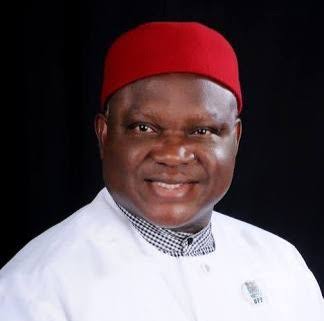
This was contained in an open letter titled 2027: AUSPICIOUS OPPORTUNITY FOR THE IGBO TO RECLAIM THEIR POLITICAL SPACE IN NIGERIA, written by Chief Chekwas Okorie (Ojeozi Ndigbo),
Convener/National Chairman of
Igbo Agenda Dialogue, IAD, which was made available to newsmen in Abuja, Tuesday.
Chief Okorie noted that the Igbos have set for ourselves the modest, realizable, and measurable target of ensuring that by the end of the ongoing window of the continuous voters registration exercise, the Southeast Geopolitical zone would be recording an impressive figure of 20 million registered voters.
In the same vein, the Igbo stakeholders have projected to mobilize about 15 million aggregate number of Igbo registered voters in the rest of the country.
“We are confident that with a minimum of 35 million Igbo voting bloc for the 2027 general elections, Ndigbo will be on their way to Igbo political resurgence and restoration of our long lost relevance and respect in Nigeria”.
He explained that, in Nigeria’s brand of democracy, electoral victories are predicated on numerical strength and geographical spread, stressing that a politically conscious Igbo electorate has no excuse not to be a critical factor in Nigeria’s political power equation at any given time since the return of democratic governance in Nigeria.
Chief Okorie therefore urged the Igbo people to aggressively come out en masse and register for the INEC continuous voters registration, saying that failure to register as a voter amounts to self-denial of one’s inalienable rights to participate in the recruitment of one’s preferred representative, governor, and president at all levels.
“Refusing to vote in the election means that you have inadvertently and unwittingly voted for the person or persons you ordinarily would not want to represent or govern you. In the likely event of a referendum or a plebiscite for self-determination, state creation, or the recall of a failed representative, only those with their valid voters cards will be eligible to participate in such crucial events.
“In the absence of a credible population census, it is the quantum of votes recorded by the Igbo that will be the yardstick to weigh Igbo political relevance in Nigeria. Igbo participation in the recruitment of elected leaders where they are domiciled anywhere in Nigeria immediately becomes their bargaining chip in making claims and demands for patronages and inclusiveness in those places.
“The INEC portal remains open for online continuous voters registration. Sadly, findings show that the Southeast is still trailing behind other geopolitical zones by a wide margin. Again, it is now possible for already registered voters to change their earlier registered polling units to their preferred polling units online for ease of voting on election day.
“This innovation has effectively removed the incidence of disenfranchisement by INEC officials or agents.
“The results of the 2023 elections published by INEC showed that the number of registered voters in the Southeast geopolitical zone was 11.5m, and the number of voters who participated in the presidential election was 2.2m. In spite of the fact that the Southeast recorded the least number of registered voters per geopolitical zone, the matter was worsened by the fact that a whopping 9.3m registered voters did not participate in the 2023 presidential election”, he said.
He maintained that studies have shown that Igbo people constitute about ninety-nine percent of the population in the Southeast geopolitical zone and approximately the second largest single ethnic population in the remaining thirty one states and the Federal Capital Territory.

