

Fidelia Soriwei, Abuja
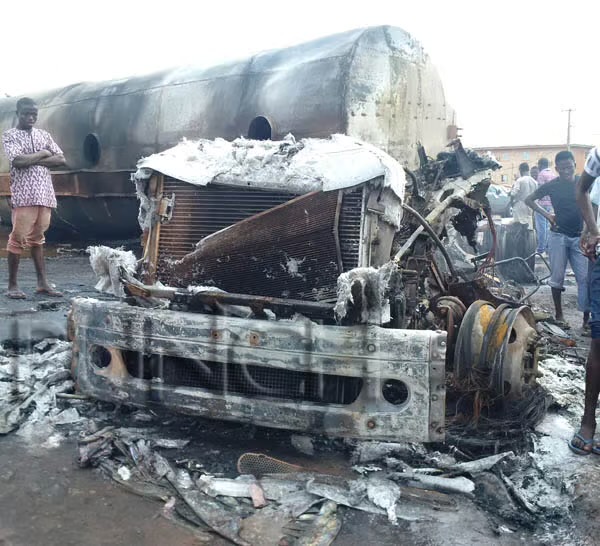
A safety expert has called for mandatory inspection and certification of fuel tankers before they are cleared from Nigerian ports following an explosion at Oluku Market in Benin City, Edo State, which left several people injured and destroyed vehicles and market property.
The President of the Institution of Safety Professionals of Nigeria, Timothy Iwuagwu, said stricter safety checks were needed to address mechanical defects, poor truck designs and non-compliance with safety standards.
He also warned Nigerians against approaching fallen fuel tankers or scooping spilled petroleum products, stressing that leaked petrol could trigger a fire or explosion capable of causing fatalities.
“Whenever a tanker truck that is laden with volatile organic material falls, the first thing, the first reaction by people within that environment, is to keep away. Keep away from that; they are not to go closer to it,” Iwuagwu said.
He advised authorities to cordon off accident scenes to prevent residents from coming into contact with highly flammable substances, including Premium Motor Spirit (PMS).
“And we have seen situations where people are going close and they want to take from this spilled material without giving cognizance to its high-risk nature. Exposure to such could be very, very dangerous and sometimes fatal,” he said.
Iwuagwu described attempts to scoop spilled fuel as extremely dangerous, warning that a spark or electrostatic discharge could ignite petrol vapour and trigger an explosion.
He identified several possible causes of tanker accidents, including poor safety compliance, inadequate vehicle inspection, faulty construction, bad roads and defects involving tyres, suspension and steering systems.
“The root causes can be traced to the design, because safety and security issues must be addressed from the design and construction stages of infrastructure, equipment, and components. But I think the issue is about safety compliance,” he said.
The expert questioned how a tanker involved in an accident could spill its entire load, arguing that the vehicle’s design and structural integrity should be examined as part of investigations into the Edo explosion.
He urged regulators, vehicle inspection officers and road safety officials to prioritise mechanical condition and roadworthiness rather than concentrating solely on vehicle documents.
“These trucks must be inspected and certified safe enough before the custom can give or get it cleared from the port from wherever it came in,” Iwuagwu said, calling for stronger oversight of imported tanker trucks with different designs and configurations.
He also advocated transporting petroleum products by rail to reduce the number of fuel tankers on highways and limit the risks associated with moving highly flammable substances through populated areas.
“The best way to move these things is by rail. It’s by rail. The pipeline is a good method, is the newest of the transportation systems or modes,” he said.
The explosion at Oluku Market reportedly caused extensive damage, including the destruction of two buses, an Audi saloon car, a truck and parts of the market. Iwuagwu said improving tanker safety standards, strengthening enforcement and expanding alternative transportation systems would help reduce the risks of similar incidents.

