

Fidelia Soriwei, Abuja
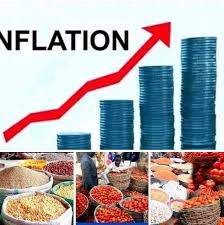
Nigeria’s inflation rate rose for the third consecutive month in May, reaching 15.93 per cent as food and service costs continued to drive increases in consumer prices across the country.
Data released by the National Bureau of Statistics on Monday showed that headline inflation increased from 15.69 per cent in April to 15.93 per cent in May.
The Consumer Price Index also rose to 140.7 points from 138.3 recorded the previous month.
Despite the annual increase, the pace of price growth slowed on a month-on-month basis. The NBS reported that monthly inflation eased to 1.75 per cent in May from 2.13 per cent in April.
Food inflation remained the biggest contributor to overall inflation, standing at 16.96 per cent year-on-year.
The bureau attributed the rise largely to higher prices of staple foods, including onions, maize, tomatoes, pepper, cassava products, yam, ginger, plantain and cowpea.
On a monthly basis, food inflation moderated to 2.98 per cent from 3.63 per cent in April, indicating a slower rate of increase in food prices.
The report also showed that core inflation, which excludes farm produce and energy prices, stood at 16.82 per cent year-on-year.
However, core inflation accelerated to 1.94 per cent month-on-month from 1.03 per cent in April, suggesting persistent underlying price pressures in the economy.
Services inflation remained elevated at 17.92 per cent year-on-year, while imported food inflation was recorded at 14.60 per cent.
Among the states, Yobe recorded the highest annual inflation rate at 24.94 per cent, followed by Anambra at 23.29 per cent and Sokoto at 22.60 per cent. Niger posted the lowest rate at 3.07 per cent, ahead of Plateau at 7.10 per cent and Edo at 7.73 per cent.
For food inflation, Adamawa recorded the highest annual rate at 29.62 per cent, followed by Kwara at 28.47 per cent and Rivers at 28.40 per cent.
The NBS also reported that the average inflation rate for the 12 months ending May 2026 stood at 18.36 per cent, lower than the 30.57 per cent recorded during the corresponding period in 2025.
While inflation remains significantly below the levels recorded a year ago, the latest figures indicate that consumer prices are still rising, with food, services and other core components continuing to exert pressure on household spending.

