

Fidelia Soriwei, Abuja
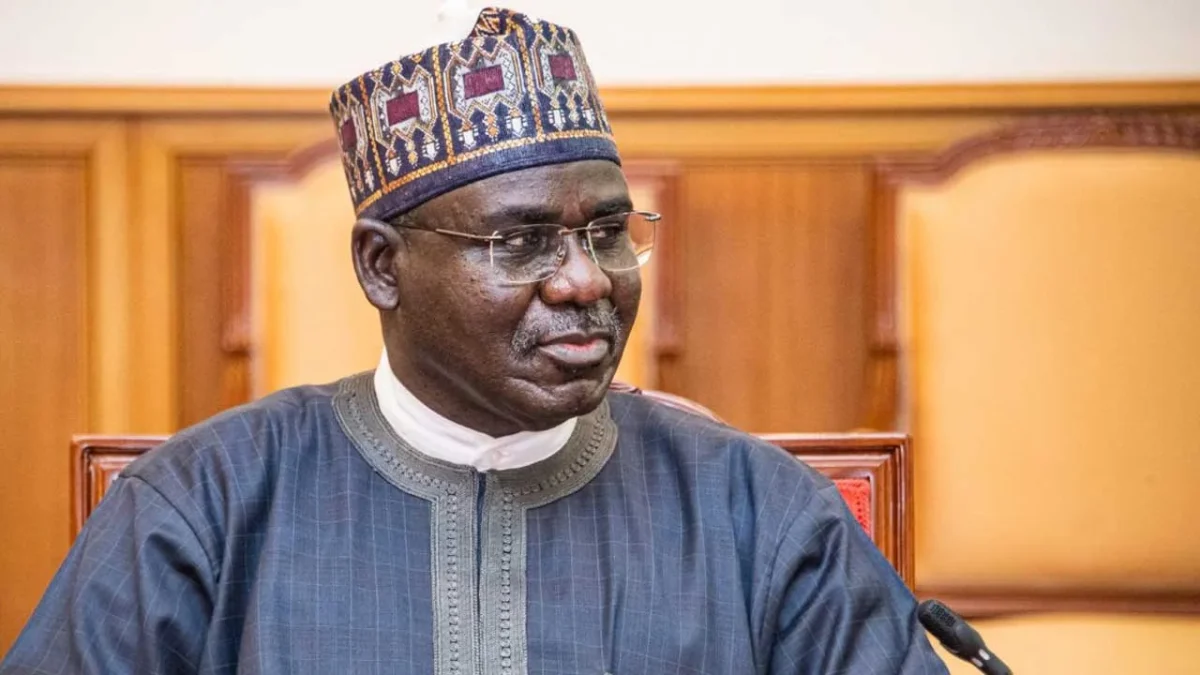
Former Chief of Army Staff, Lt. Gen. Tukur Buratai (retd.), has said the $1bn approved for defence procurement during his tenure was released to the Ministry of Defence and never passed through his hands or the accounts of the Nigerian Armed Forces.
Buratai spoke on Monday at a conference organised by the Defence Correspondents Association of Nigeria in Abuja, where he addressed allegations surrounding the funds approved by the National Economic Council.
He described the allegations as “political and malicious”, saying they emerged during the 2019 election period when opposition figures claimed the money had been diverted for electoral purposes.
“The $1 billion was approved by the National Economic Council for defence procurement. Not a single dollar of that fund passed through my hands or through the accounts of the Nigerian Army, Navy, or Air Force. The funds were released to the Ministry of Defence, and the entire procurement process was handled by that ministry.
“The Army, Navy, and Air Force never had a single dollar from that fund to make procurement directives. I have described these allegations as political and malicious. They first surfaced during the 2019 election period, when the opposition alleged the funds had been diverted for electoral purposes-a claim the Federal Government publicly refuted. Yet the stain remained, attached to the Service Chiefs rather than the institution that managed the funds”, Buratai stated.
The retired army chief said the Federal Government had publicly rejected the diversion allegation at the time, but the controversy continued to affect the reputations of service chiefs.
He faulted the Ministry of Defence for failing to publicly clarify how the money was disbursed and how procurement contracts were awarded.
“The ministry then, on its own, had not publicly explained how funds were disbursed or contracts awarded. Accountability must be properly located,” he said.
Buratai called for greater transparency in military procurement, proposing a defence procurement transparency portal to disclose broad categories of contracts, contracting entities and delivery timelines, subject to national security restrictions.
“The Ministry of Defence must own procurement records. The $1 billion arms procurement controversy festered because the institution that managed the funds, the Ministry of Defence, remained silent while Service Chiefs absorbed criticism.
“I recommend a Defence Procurement Transparency Portal that publishes, within national security limits, broad categories of contracts awarded, contracting entities, and delivery timelines. When the media asks where the money went, the answer should come from the ministry that spent it, not from military officers who never touched it,” he said.
He also proposed quarterly accountability bulletins summarising court-martial outcomes involving human rights violations and operational conduct, provided the disclosures did not undermine the rights of accused personnel or ongoing military operations.
On allegations of human rights abuses by security personnel, Buratai said credible claims should be investigated and prosecuted where substantiated.
“I have always maintained that where credible allegations exist, they must be investigated and, where substantiated, prosecuted. The military is not above the law,” he said.
He added that the military needed to demonstrate that its disciplinary procedures were credible, transparent and capable of addressing allegations at every level. He also called for better communication by the Armed Forces and the Ministry of Defence to give the public fuller context on security operations.
Speaking at the event, the Minister of Information and National Orientation, Mohammed Idris, said military force alone could not resolve Nigeria’s security challenges. He called for stronger intelligence gathering, modern technology and closer cooperation among security agencies and local communities.
Idris, represented by the Director-General of the Voice of Nigeria, Jibrin Ndace, said military operations remained necessary but should be supported by measures addressing the conditions that enabled criminal groups to recruit and threaten citizens.
“This Conference’s theme is particularly relevant because today’s security threats cannot be addressed by force alone. Military operations remain necessary, but they must be supported by reliable intelligence, modern technology, effective coordination among security agencies and cooperation with communities,” he said.
The minister said President Bola Tinubu’s Renewed Hope Agenda prioritised national security, adding that the administration was pursuing military modernisation, intelligence-led operations, improved surveillance and better coordination among security and intelligence agencies.
He also disclosed that Tinubu directed the preparation of a comprehensive National Threat Assessment and a rolling five-year Strategic Defence Operations Plan in August 2026 to improve coordination, set priorities and guide resource deployment.
Idris said the President had approved salary increases of between 30 and 80 per cent for Armed Forces personnel, effective September 2026, in recognition of their sacrifices.
He said security policies should produce tangible benefits for Nigerians, including safer communities and roads, protection for farmers and businesses, and safer access to schools.
On media coverage, Idris urged journalists to verify information and report security developments accurately to prevent rumours from causing panic or undermining operations. However, he said responsible reporting should not shield the government or security agencies from scrutiny.
“This does not mean shielding the government or the security agencies from scrutiny. Journalists must keep asking difficult questions and hold institutions accountable, while respecting legitimate operational sensitivities,” he said.

