

Fidelia Soriwei, Abuja
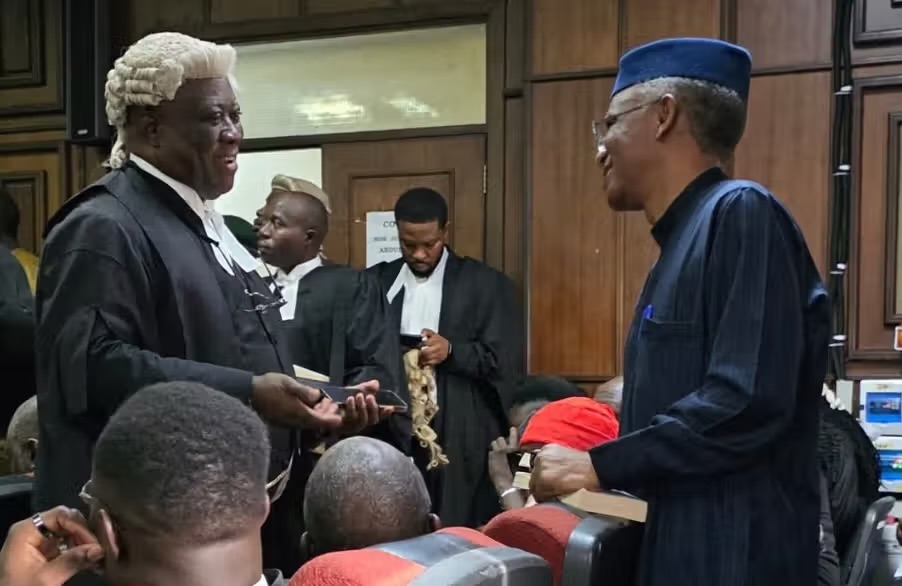
The Court of Appeal in Kaduna has dismissed former Kaduna State Governor Nasir El-Rufai’s appeal against the refusal of his fresh bail application, ruling that he failed to present new facts or special circumstances to justify overturning the decision.
A three-member panel unanimously delivered the judgment on Thursday, affirming the Kaduna State High Court’s June 10, 2026, ruling denying the former governor bail in his ongoing prosecution by the Independent Corrupt Practices and Other Related Offences Commission (ICPC).
In the lead judgment, Justice Onyekachi Aja Otisi held that the lower court acted within its judicial discretion in evaluating the affidavit evidence submitted by both the prosecution and the defence.
“There is no merit in this appeal; it fails and is hereby dismissed. The ruling of the lower court delivered on 10/6/2026 is hereby affirmed,” Otisi held.
El-Rufai, who governed Kaduna State from 2015 to 2023, has denied wrongdoing and challenged the circumstances surrounding his continued detention. After the High Court rejected his second bail application, he approached the appellate court to challenge the decision.
The prosecution had opposed his release, citing concerns that some of his public comments during a televised interview could interfere with the course of justice. It also alleged that he admitted during an Arise Television interview on April 26, 2026, to wiretapping the telephone line of the National Security Adviser.
According to the judgment, El-Rufai acknowledged participating in the interview and noted that he was facing a separate case relating to the subject matter. However, the appellate court stressed that its decision on bail did not establish his guilt.
“Now, without doubt, by unequivocal constitutional provisions, the appellant is presumed innocent until proven guilty,” Otisi stated.
The court also rejected the argument that El-Rufai’s return to custody after attending his late mother’s burial demonstrated that he was not a flight risk and constituted sufficient grounds for bail.
The former governor had relied on photographs allegedly showing him attending funeral prayers at the National Mosque in Abuja. However, the appellate court noted that the photographs were referenced in his affidavit but were not attached to the application considered by the trial court.
Otisi said the trial judge could not rely on evidence that had not been presented before the court.
“Courts are not allowed to act on speculations or conjecture to reach a decision, more so in our criminal jurisprudence,” he said.
The appellate court consequently upheld the lower court’s conclusion that El-Rufai had not established that his return to custody was entirely voluntary or that the circumstances warranted a different bail decision. It also noted the prosecution’s argument that security agents accompanied and monitored him during the burial period.
The court further upheld the order for an accelerated hearing of the criminal trial, directing that proceedings should continue on a day-to-day basis as far as practicable while El-Rufai remained in ICPC custody. It found no evidence that the prosecution had failed to pursue the case diligently.
Otisi added that the former governor could return to the trial court to seek further consideration of his bail application if the prosecution failed to prosecute the case diligently.
In separate concurring judgments, Justices Abimbola Obaseki-Adejumo and Lateef Ganiyu agreed that El-Rufai had not presented fresh and compelling evidence to justify a different outcome. Obaseki-Adejumo held that the circumstances had not changed sufficiently to establish a miscarriage of justice.
The ICPC took El-Rufai into custody in March 2026 following an investigation into alleged financial offences and procurement irregularities during his administration. The allegations remain subject to determination by the court.

