

Fidelia Soriwei, Abuja
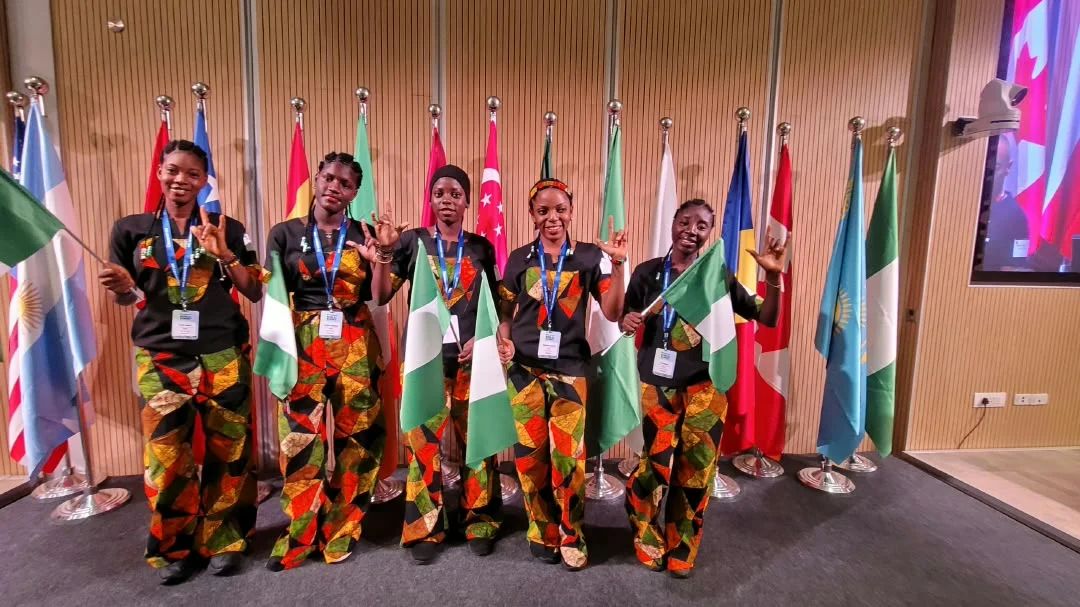
Five hearing-impaired Nigerian schoolgirls from Government Secondary School, Kuje, Abuja, have emerged as global finalists at the 2026 Technovation Girls World Summit in Bengaluru, India, with an artificial intelligence-powered application designed to improve access to menstrual products and health information.
The team, known as the STRIM Girls, presented their innovation, Saving Pad, after competing against thousands of teams from more than 160 countries, according to a statement issued on Monday by the Technology Beyond Disability Initiative.
The team comprises Adegbile Teniola Vivian, Sulaiman Maryam Adenike Isah, Moses Joy, Ukpapi Theresa Uzepi and Yusuf Ruth. The girls developed the application with mentorship from the initiative to address menstrual health challenges, particularly those affecting deaf girls and students with disabilities.
Explaining the motivation behind their project, the girls said, “Because when a girl’s period starts, the question should never be: ‘What am I going to do?’ It should be: ‘I know where to go.’”
The Saving Pad application features an interactive map that helps users locate nearby sanitary pad banks, request menstrual products, track their periods and access menstrual health education.
It also enables coordinators to monitor available supplies and receive alerts when stocks run low, helping ensure that sanitary products can be replenished when needed.
In partnership with the Deaf Women Aloud Initiative, the team has launched a pilot programme across three special schools in Abuja. The initiative is expected to expand to primary healthcare centres and vulnerable communities across Nigeria.
Beyond helping individual users, the platform is designed to support non-governmental organisations and donor agencies in tracking sanitary product distribution, monitoring demand and coordinating the restocking of pad banks.
At the international summit, the students demonstrated how accessible technology and community-based interventions could help address menstrual health barriers while supporting the United Nations Sustainable Development Goals on good health and well-being, quality education, and partnerships.
The girls received a welcome at the airport upon returning to Nigeria. The reception was led by the Director-General and Chief Executive Officer of the Maryam Babangida National Centre for Women Development, Dr Adedayo Benjamins-Laniyi, alongside members of her management team.
Their achievement highlights the contribution of Nigerian students with disabilities to global technology innovation and demonstrates how artificial intelligence can be applied to menstrual health, inclusive education and access to essential sanitary products.

