

•••13 Oil Flow Stations Producing about 400,000 BPD Remains Shut Down
•••Chevron, Shell, NestOil/Neconde affected
The ongoing protests over the delayed execution of the Supreme Court verdict on the Warri Federal Constituency Ward Delineation had entered its second day with the nation’s economy losing 400,000 barrels of crude oil.
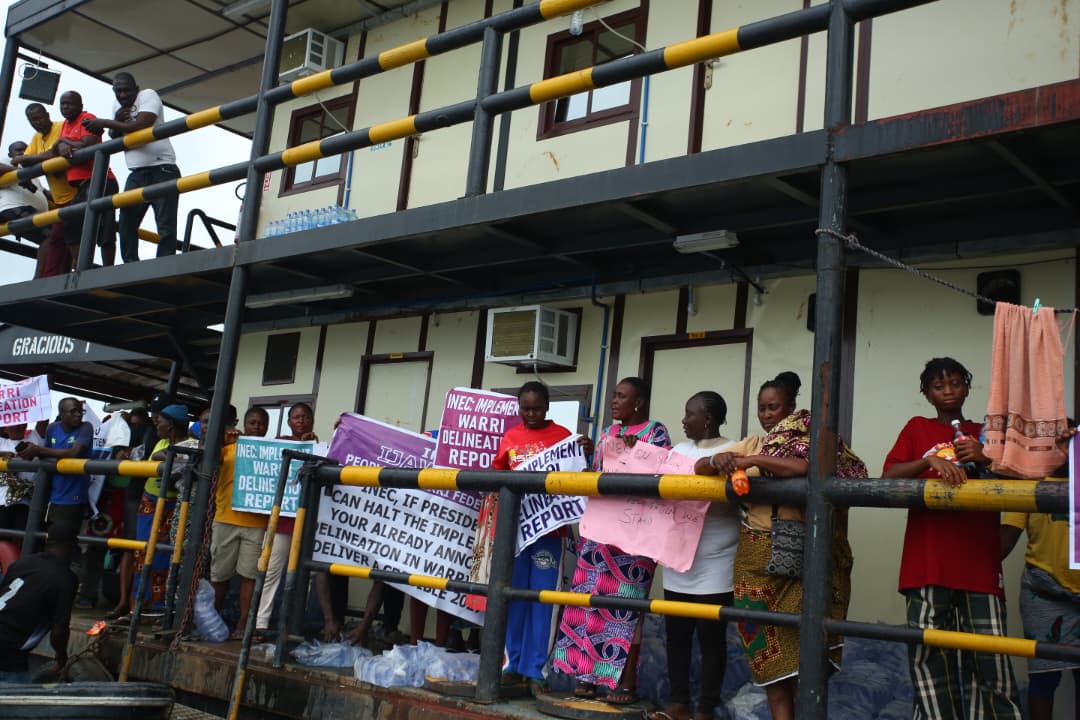
The protest by Ijaw and Urhobo youths and women has affected oil facilities are operated by three energy giants, Anglo-Dutch oil conglomerate, Shell Petroleum Development Company (SPDC), American-owned Chevron Nigeria Limited (CNL) and NESTOIL/NECONDE.
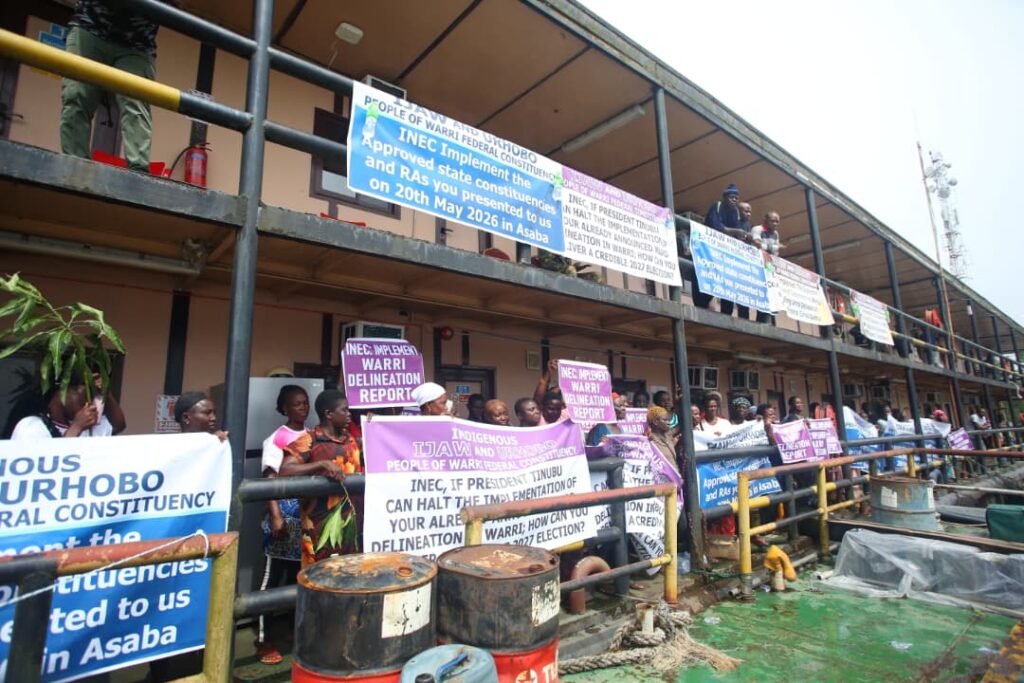
The oil facilties affected by the protest by aggrieved communities are Odidi 1 and 2, Batan, Ogbanabou, Jones Creek, Otunana, Egwa 1 and 2, Abiteye, Makaraba, Olero creek, Dibi field and Opuekeba flowstations.
The Network gathered that the 13 oil facilities collectively produce about 400,000 barrels of crude oil per day.
The flow stations were seized by hundreds of women and youths from Gbaramatu, Ogbe-Ijoh, Isaba, Egbema and Diebiri Kingdoms, in Warri Federal Constituency, made of Warri South, South West and Warri North Local Government Areas of Delta State.
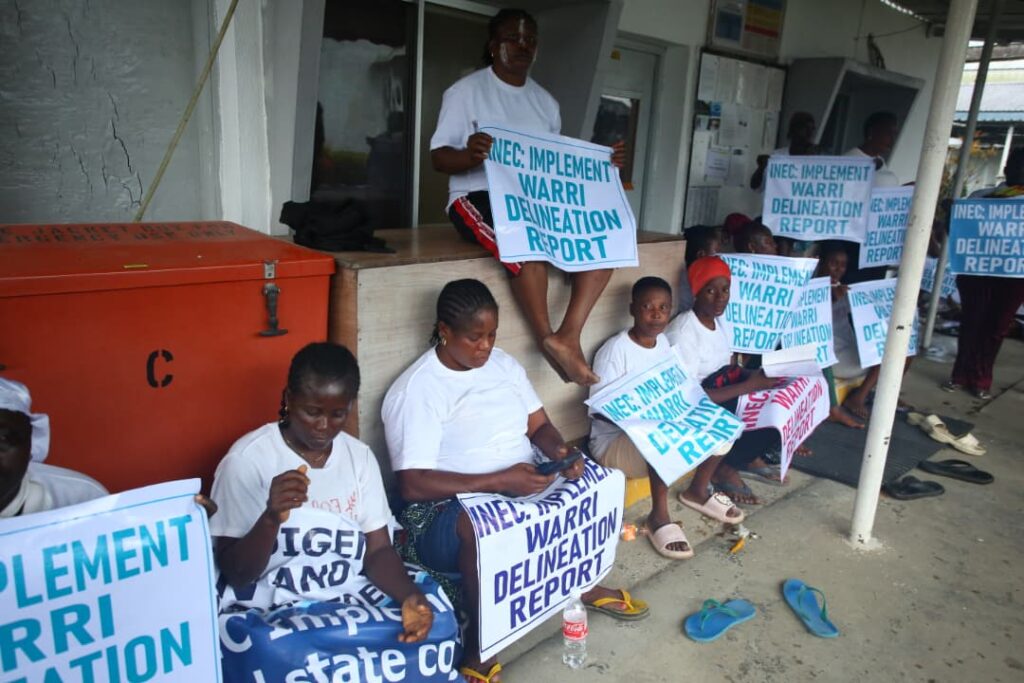
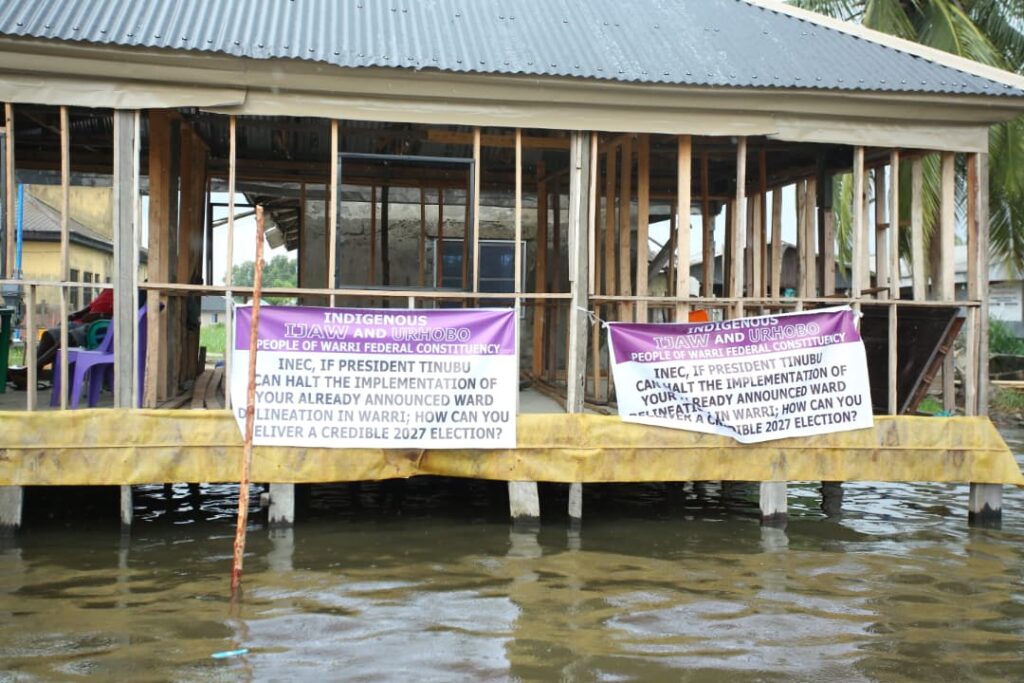
It was learnt that the protesters took over and occupied the facilities after edging out the companies’ security personnel and workers of the energy companies.
Reports from the companies also indicated that the protesters barred all logistic supplies to the three companies through the waterways, a development that further worsened the operations of the oil companies.
The aggrieved women and youths, mainly of Ijaw ethnic nationality, were protesting against the non-implementation of the recently approved ward delineation exercise by the National Electoral Commission of Nigeria (INEC).
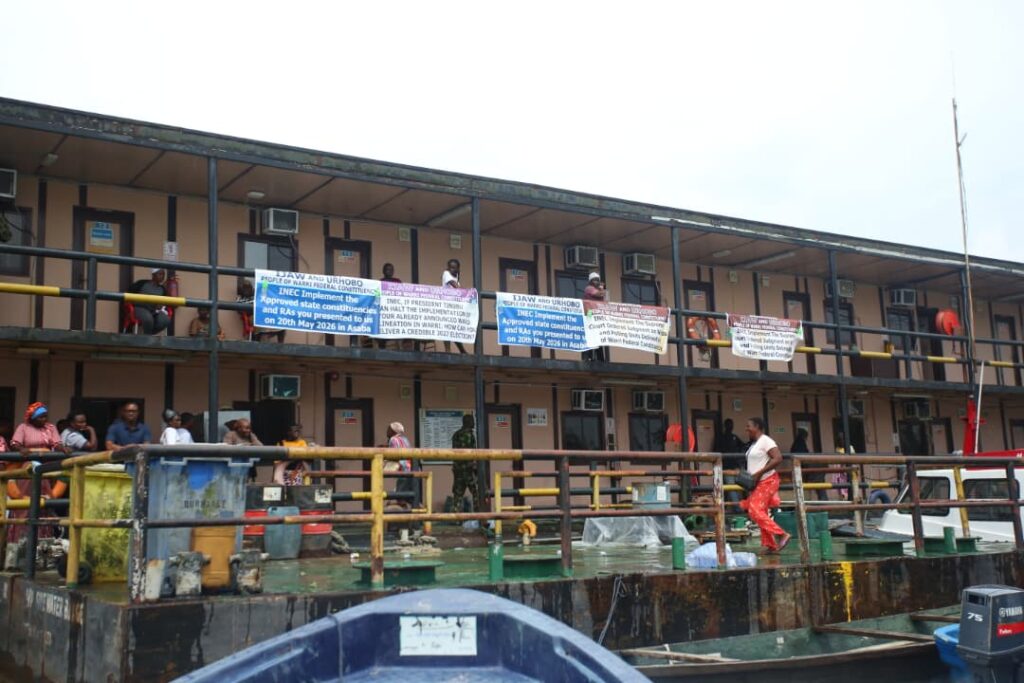
They were of the opinions that their Itsekiri neighbours were behind clandestine moves to halt the implementation of the report, which they believed was rightly done by INEC.
The seizure of the facilities came less than 24 hours after the Ijaws and Urhobo of Warri Federal Constituency vowed to shut down oil production if INEC refused to implement the final delineation report.
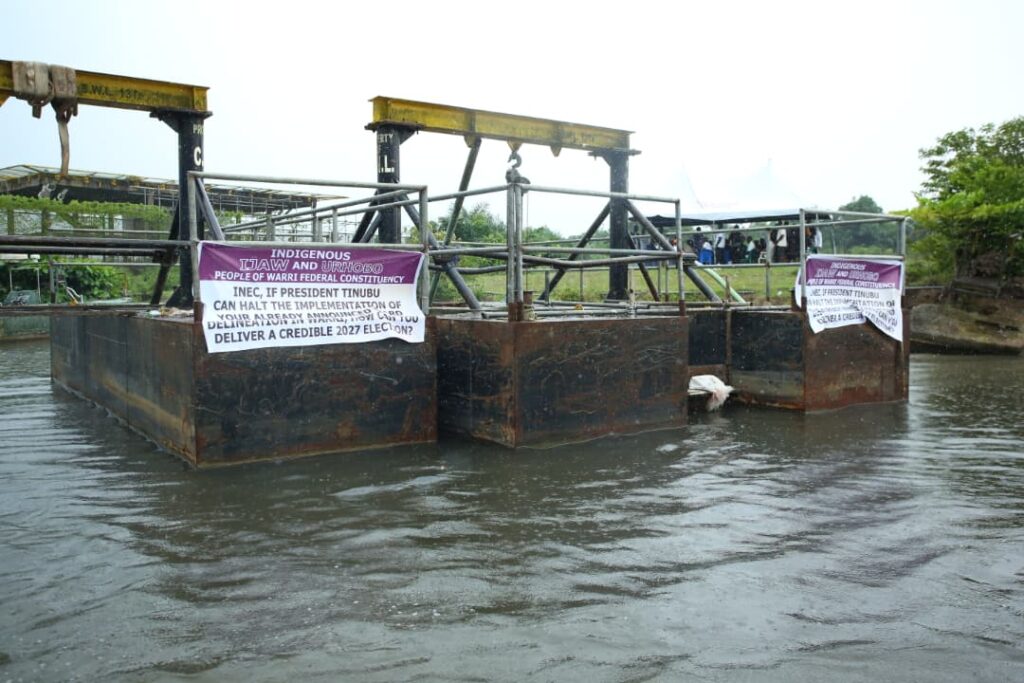
The protesters insisted that oil production activities would remain halted until the recommended ward delineation exercise as approved by the nation’s electoral umpire was fully implemented.
The protesters displayed placards with such inscriptions such as “INEC: Implement Warri Delineation Report,” “Court Ordered Judgment on Wards and Polling Units Delineation,” and “No Implementation, No Production.”
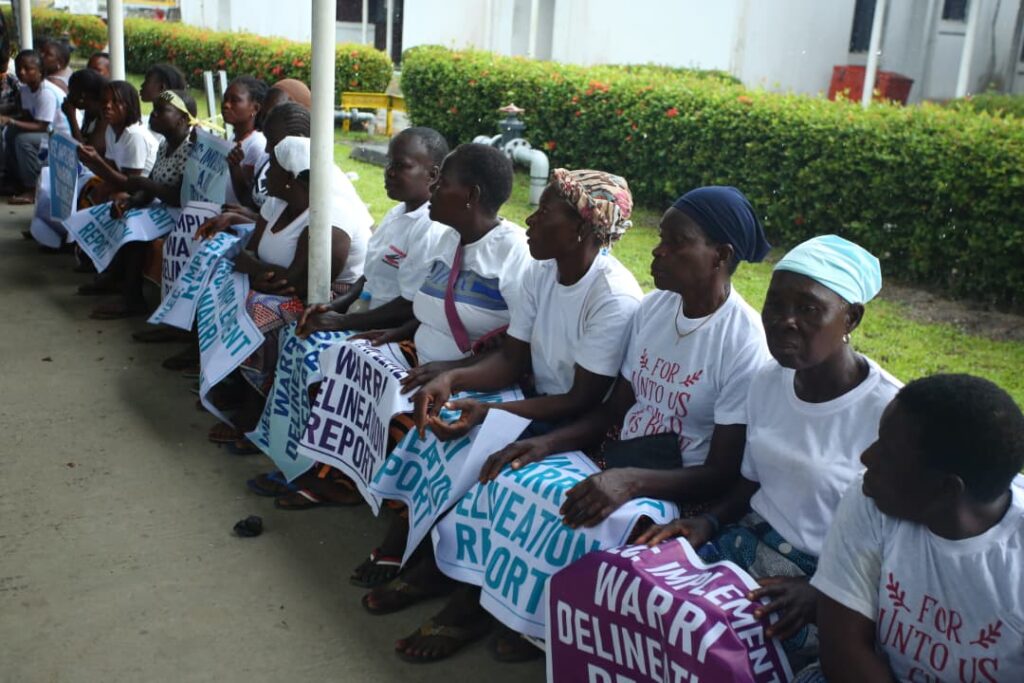
Speaking on behalf of the protesters, Chief (Mrs.) Maria Ebike accused INEC of deliberately delaying the implementation process despite the conclusion of consultations and recommendations aimed at addressing long-standing concerns over political representation in the area.
She said the ward delineation exercise was designed to ensure fairness, equity, and adequate representation for communities within the Warri Federal Constituency, adding that “some powerful forces” were behind moves to frustrate the implementation of the INEC’s report.
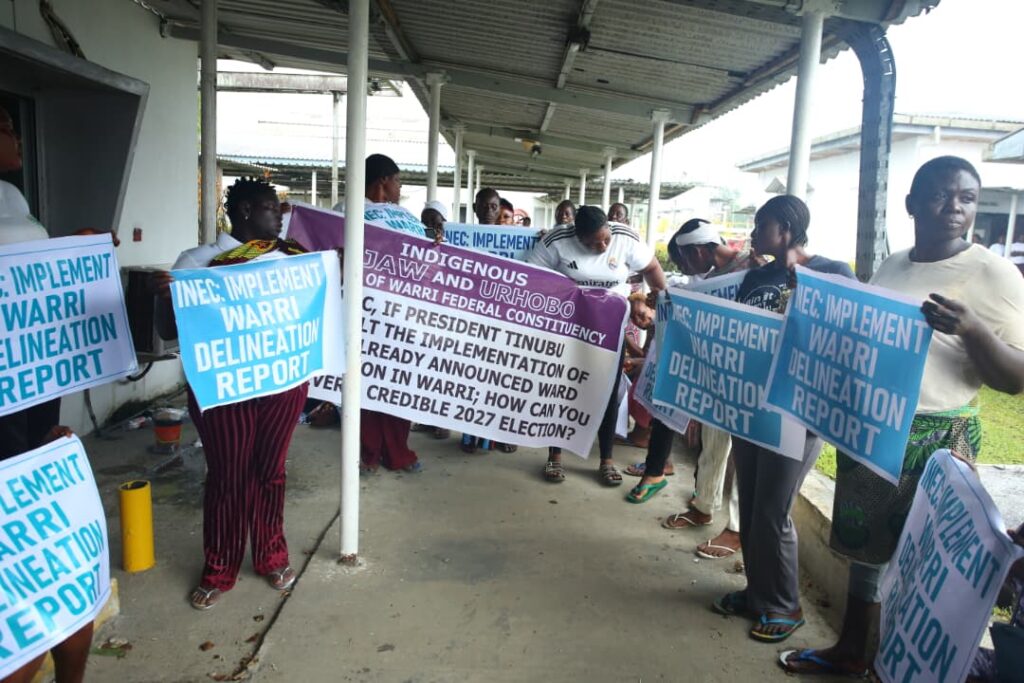
“We have waited patiently for the authorities to do the right thing. Since they continue to ignore our voices, we have no option but to demand justice through peaceful protests. No implementation of the ward delineation, no oil production,” Ebike, added.
The Supreme Court had in 2022 ordered a fresh delineation exercise in Warri Federal Constituency.
In obedience of the order by the apex court, INEC eventually carried out fresh ward delineation in Warri Federal and presented its final report to stakeholders in Asaba, the state’s capital on May 20th, 2026.
The implementation of the report had lately escalated tension among stakeholders of Ijaw, Urhobo and Itsekiri in Warri and its riverside communities as the Ijaw and Urhobo accused their Itsekiri neighbours of mobilising contacts in government to frustrate the legitimate action of the electoral body.

